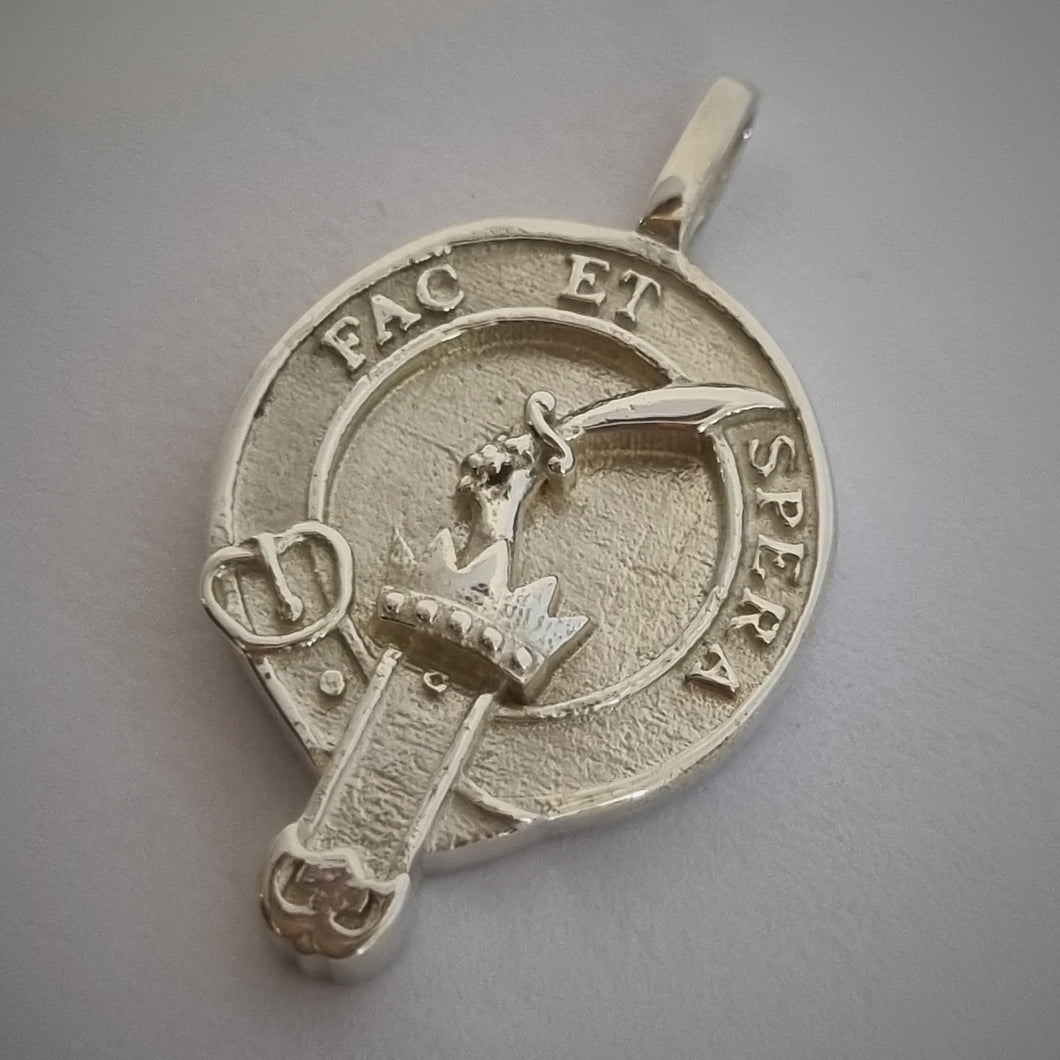
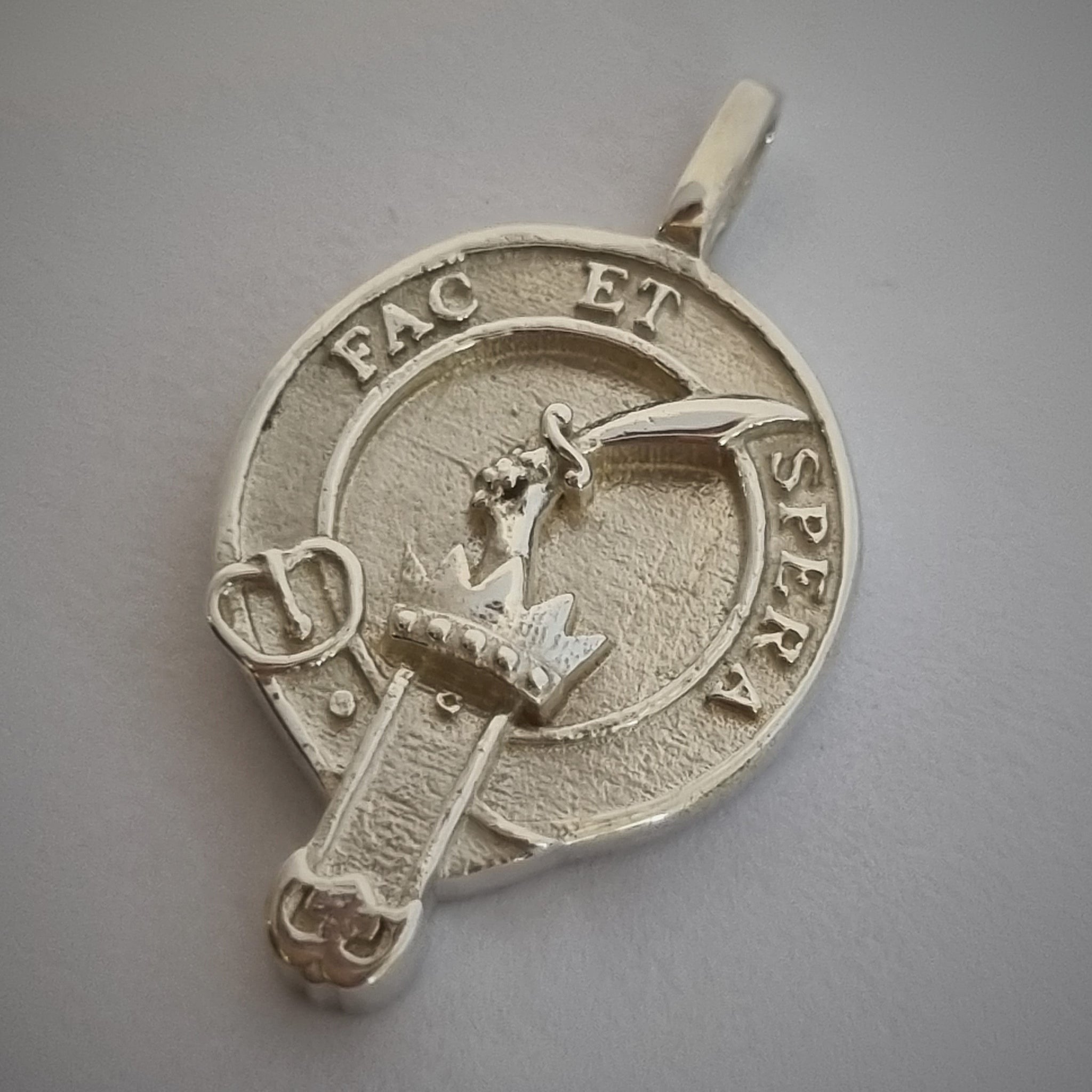
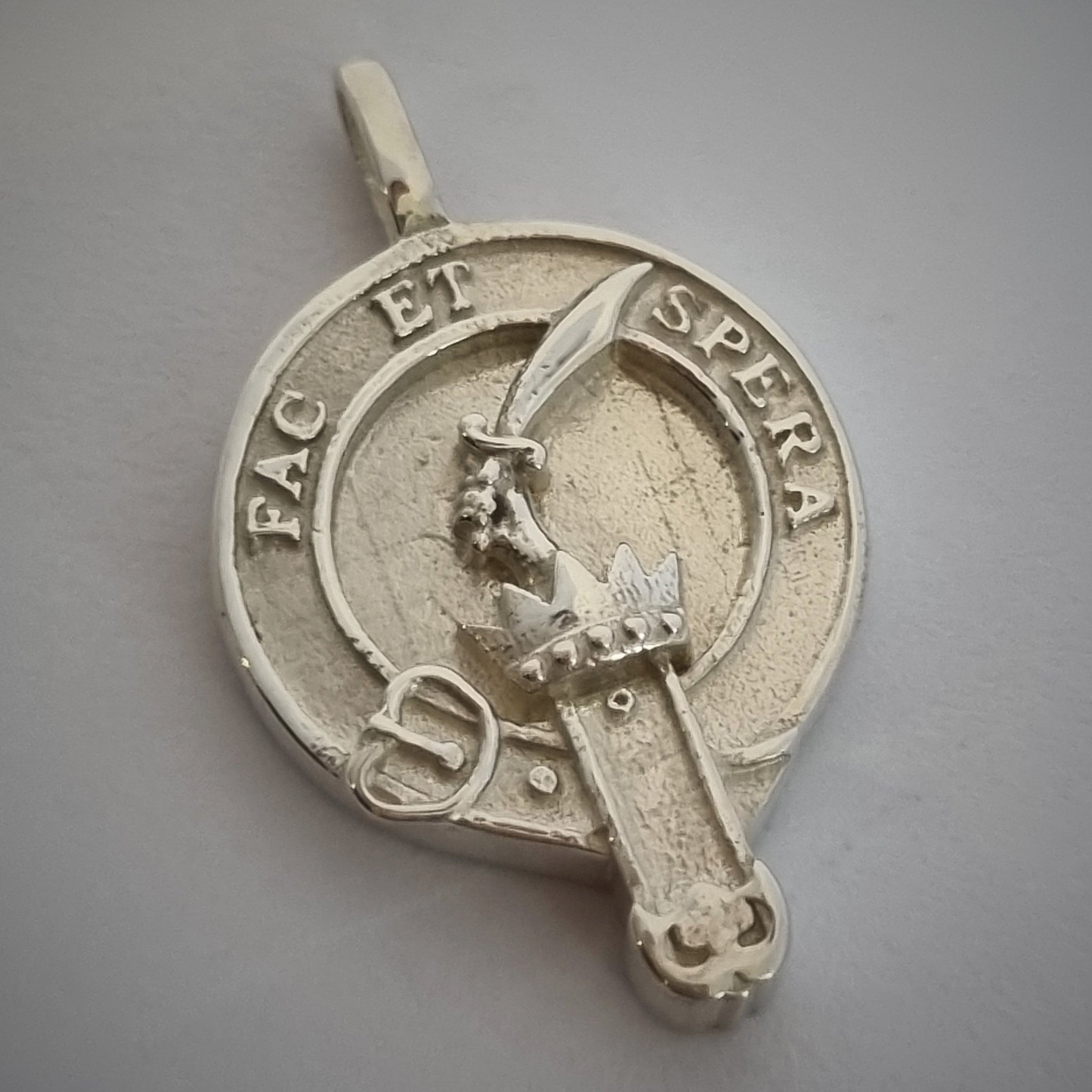
Matheson family pendant – size matches lady’s crest ring
Sterling silver pendant starting from US$58
Matheson family pendant – size matches lady’s crest ring
Sterling silver pendant starting from US$58
For centuries this Matheson Crest has been a symbol of your Scottish Family unity - see your Matheson Family History below.
Ladies celebrate your Matheson clan heritage with this finely sculptured Scottish pendant, designed in size to match the Matheson lady's Celtic sided crest ring. This Scottish Crest shows an arm rising from an antique crown brandishing a curved sword in a horizontal position and the proud Matheson clan motto, “Fac et spera’’ meaning (Do and hope)
Delivery: As we make this pendant to your order, please allow two weeks for production, and about a week to most shipping destinations. If you require your jewelry item more urgently, please let us know.
This pendant is available in solid sterling silver or gold - matching chains 20" (45cm) are also available to purchase.
"Remember the people from whence you came"
The Matheson Clan Crest is an arm rising from an antique crown brandishing a curved sword in a horizontal position and the proud Matheson clan motto, “Fac et spera’’ meaning (Do and hope).
Of the many beasts which wander this earth, few represent the virtues of strength and courage to greater effect than the great bear, a creature which has awed humanity from the earliest times. It is little wonder that the Clan Matheson's name is derived from this noble animal, from the Gaelic Mac Mhathghamhuin, meaning "son of the bear". This is a proud origin, with the name being synonymous with "son of the heroes", suggesting that the great deeds of later Mathesons had been matched by their earliest ancestors. Indeed, Cormac Macmaghan is remembered in the 13th Century as a leader of Alexander III's army, marching against the Viking strongholds in Western Scotland. In 1262, the Scottish army crossed the water to the Isle of Skye, in an early effort to break the power of the Norsemen. The following year the campaign came to fruition when the Scots defeated King Haakon's army at the Battle of Largs, driving the Norsemen from Scotland's bonny shores.
The Clan Matheson were favoured by the powerful Celtic Earls of Ross, with whom they had fought the Vikings, and were granted lands in Lochalsh, Lochcarron and Kintail. Clan Matheson's lands were set amid the rugged splendour of Scotland's western seaboard, an area immortalised in the song and verse of the nation's bards.
The Mathesons were closely allied with the Lords of the Isles, who ruled this part of Scotland almost as an independent kingdom until the mid15th Century. The Mathesons fought for Donald, Lord of the Isles, at the Battle of Harlaw in 1411, flexing the renowned Matheson muscle for the sake of their alliance. The strength of the Clan Matheson was well known, with the Matheson chief being able to summon two thousand stout-hearted warriors on a whim. However, the Mathesons were faced with difficult circumstances after the fall of the Lords of the Isles, when they became pressured between the feuding factions of their two most powerful neighbours, the MacDonalds and the MacKenzies. The Mathesons met these turbulent times with some finesse, managing to persevere through all manner of challenging situations.
By the mid16th Century, Iain Dubh of Clan Matheson was the constable of the mighty MacKenzie stronghold of Eilean Donan Castle, famed for its picturesque setting on a rocky inlet at the meeting place of the three lochs of Alsh, Duich and Long. With characteristic courage, Iain Dubh laid down his life defending this castle, in the year 1539. The Clan Matheson were by no means renowned just for their adventurous spirit, but for their significant achievements in other areas of Scottish and world history. From the earliest times Mathesons were involved in the affairs of Scotland, with Dougal Matheson, Prior of Beauly, sitting in Scotland's Parliament during the early 16th Century. This tradition of greatness was continued down through the generations and by 19th Century, James and Alexander Matheson had established the great Far Eastern trading company of Jardine Matheson. This company was enormously successful, and with the Mathesons' considerable wealth, bought up large parts of land in western Scotland, including most of the Isle of Lewis and nearly 220,000 acres of Ross-shire. Alexander was made the baronet of Lochalsh in 1882.
The chief is Major Sir Torquhil Matheson of Matheson, 6th Baronet of Lochalsh, who resides in Somerset, England.